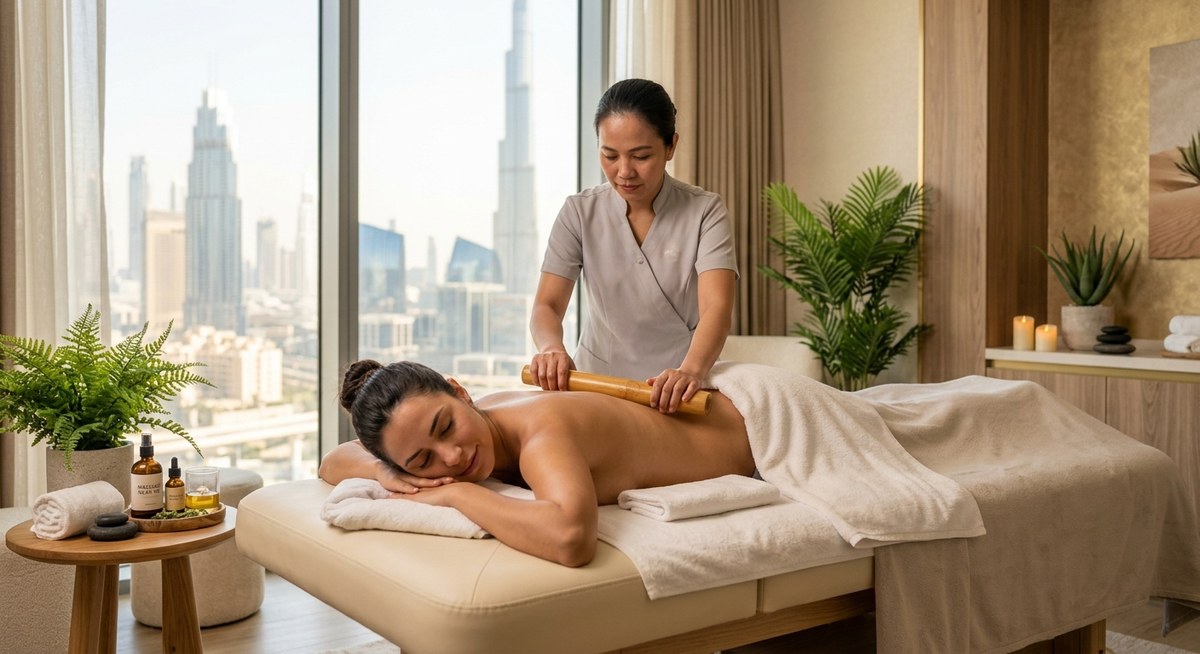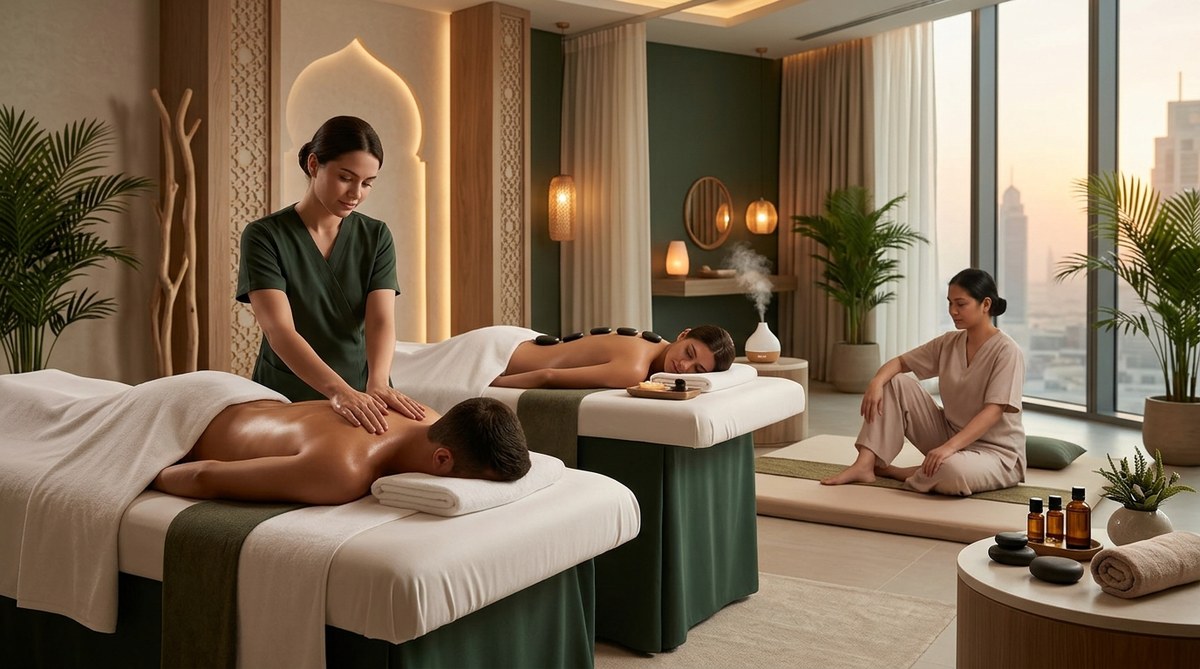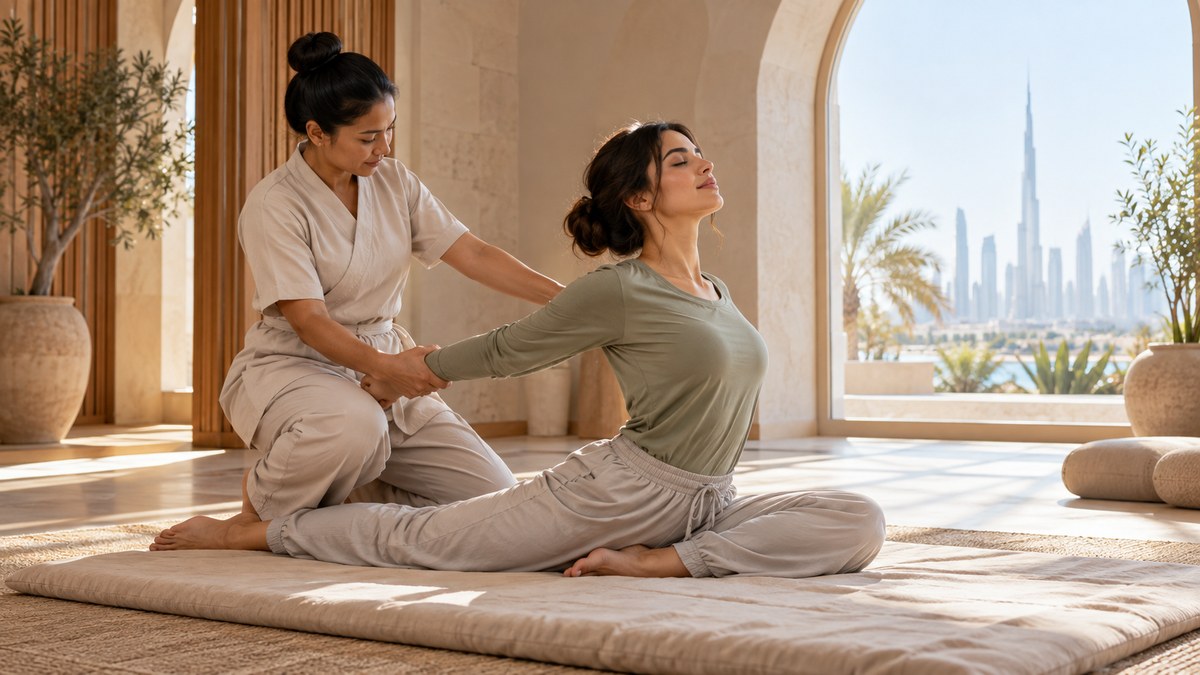
You step off your mat after a yoga session in Dubai. Your hamstrings feel tight. Your lower back is calling for attention. You know your body can go deeper into that forward fold, but something is blocking the way. What if a single bodywork session could unlock that tension and help your yoga practice feel effortless? That is where Thai massage enters the picture. It is not just a relaxation treatment. For yoga lovers in the UAE, it is a powerful tool to improve flexibility, release deep muscle knots, and prepare the body for a more fluid practice.
Thai massage uses assisted stretching and rhythmic pressure to mimic the movements of a yoga practice. For UAE yoga beginners, it helps release fascia, improves joint mobility, and deepens your passive flexibility. A 60 minute session before or after yoga can accelerate your progress and prevent injuries common in the desert climate.
Why Thai Massage Complements Your Yoga Routine
Yoga asks your body to stretch, hold, and breathe. But sometimes your muscles have a memory of their own. They hold tension from long hours at a desk in Abu Dhabi, from commuting through Sharjah traffic, or from the dry heat that saps your energy. Thai massage works on a different layer. The therapist uses their hands, thumbs, elbows, and knees to apply pressure along your energy lines. Then they guide your limbs into stretches that look like yoga postures.
This technique is often called Thai yoga massage. The reason is simple. The practitioner moves your body through a sequence of poses while you remain passive. You do not have to engage your muscles. You just relax and let them do the work. This passive stretching reaches areas that active yoga sometimes misses. It targets the connective tissue, or fascia, that wraps around your muscles. When fascia becomes sticky or dehydrated, it limits your range of motion. Thai massage helps restore that glide.
A study from 2020 showed that a single session of Thai massage can increase hip flexion by nearly 10 degrees. For a yoga lover in the UAE, that means a deeper forward fold, a more comfortable pigeon pose, and less strain on the knees during seated postures.
The Real Difference Between Thai Massage and a Regular Stretch
Many people confuse Thai massage with a simple assisted stretch. They are not the same thing. A typical assisted stretch focuses on one muscle group at a time. Thai massage is a full body conversation. The therapist uses a rhythm of compression, traction, and rocking to prepare the tissue before the stretch. This three step process makes the stretch safer and more effective.
Here is a breakdown of the key differences:
| Aspect | Regular Assisted Stretch | Thai Massage |
|---|---|---|
| Approach | Targets one muscle group | Full body flow with transitions |
| Pressure | Light to moderate | Deep tissue with rhythmic compression |
| Breathing | Often overlooked | Synced with therapist’s movements |
| Duration per pose | 15 to 30 seconds | 2 to 5 minutes with rocking |
| Result | Temporary length | Lasting release of fascia |
| Best for | Post workout cool down | Deep flexibility and relaxation |
The table shows why Thai massage is a better fit for yoga lovers. It mirrors the flow of a vinyasa class. You move from one pose to the next without stopping. The therapist uses their body weight to apply pressure, which helps release knots that a regular stretch cannot reach.
How to Prepare for Your First Thai Massage in the UAE
Booking your first session can feel a bit unknown. You might wonder if it will hurt, what to wear, or how to communicate with the therapist. Here is a simple numbered list to guide you through the process:
-
Hydrate well before your session. The UAE climate is dry. Drink at least 500 ml of water an hour before your appointment. This keeps your muscles pliable and helps flush out toxins released during the massage.
-
Wear loose, comfortable clothing. Thai massage is performed on a mat on the floor. You will be moved into various positions. Wear shorts and a t shirt or yoga leggings. Avoid anything with zippers or thick seams.
-
Communicate your yoga goals. Tell the therapist which poses you struggle with. If you cannot touch your toes in Uttanasana, they will focus on your hamstrings and lower back. If your shoulders feel tight in downward dog, they will work on your upper body.
-
Arrive 10 minutes early. This gives you time to fill out a health form and settle your mind. Rushing into a session reduces the relaxation response.
-
Set an intention for the session. Just like in yoga, having a focus helps. It could be releasing fear, softening the hips, or simply letting go of the week’s stress.
Common Mistakes Yoga Beginners Make with Thai Massage
It is easy to fall into habits that reduce the benefits of your session. Here are the most common errors and how to avoid them:
-
Holding your breath during stretches. When the therapist pushes you into a deep hip opener, your instinct may be to hold your breath. Breathe slowly through your nose. Exhale as they apply pressure. This signals your nervous system to relax.
-
Fighting the movement. You might try to help the therapist by lifting your leg or pulling your arm. Stay passive. Let them control the movement. Your job is to receive.
-
Skipping the warm up. Some yoga lovers book a Thai massage right after a class. That can work, but a cold body is less responsive. If you book a standalone session, do a few sun salutations first to warm the muscles.
-
Expecting a gentle experience. Thai massage is deep. It can feel intense. The therapist uses their body weight to press into tight spots. Communicate if the pressure is too much. A good therapist will adjust.
“The most common feedback I hear from yoga beginners in Dubai is that Thai massage feels like a yoga class where someone else does the work. That is exactly the point. Your body learns a new range of motion without the mental effort of holding a pose.” — Fatima Al Hashimi, certified Thai massage therapist at a Dubai wellness center.
When to Schedule Thai Massage Around Your Yoga Practice
Timing matters. A Thai massage session can leave you feeling deeply relaxed and sometimes a little spacey. That is normal. The body releases stored tension, and your nervous system shifts into a parasympathetic state. Here are the best ways to schedule it:
-
Before a yin or restorative class. A Thai massage session the day before a slow practice prepares your connective tissue for long holds. You will sink deeper into poses without strain.
-
After a week of intense vinyasa. If you have been practicing power yoga five days in a row, your muscles are fatigued. A Thai massage on your rest day helps repair micro tears and reduces soreness.
-
On a separate day from your practice. For beginners, it is best to keep the massage and yoga on different days. Your body needs time to integrate the changes. Doing both on the same day can overwhelm your system.
-
Mid week reset. If you work in a high stress job in Dubai Media City or Abu Dhabi’s financial district, book a session on Wednesday evening. It breaks up the week and resets your posture before the weekend.
What to Expect During a 60 Minute Session
A standard Thai massage session follows a logical sequence. The therapist starts with your feet and works upward. They use a combination of thumb pressure, palm gliding, and elbow compression. Then they move you into stretches. You might recognize poses like the cobra, the seated forward fold, or the spinal twist.
The session ends with a gentle rocking motion to calm the nervous system. Some therapists apply a warm towel or a light oil to finish. You will leave feeling taller, looser, and more connected to your body.
Here is a bulleted list of sensations you might feel during the session:
- A deep, satisfying pressure on tight spots
- A pulling sensation in your hamstrings and hips
- A feeling of being rocked like a wave
- Heat building in areas of tension
- A sense of mental calm as the session progresses
- A slight dizziness when you stand up afterward (this is normal)
How to Maximize the Results at Home
Your session does not end when you leave the spa. What you do in the following 48 hours determines how long the benefits last. Follow these tips:
-
Drink plenty of water. The massage releases metabolic waste from your tissues. Water helps flush it out. Aim for 2 to 3 liters over the rest of the day.
-
Avoid intense workouts for 24 hours. Your muscles need time to adapt. Stick to a gentle walk or a yin yoga class.
-
Stretch the areas that were worked on. If the therapist focused on your hips, do a few seated hip openers the next morning. This reinforces the new range of motion.
-
Take an Epsom salt bath. Many UAE homes have bathtubs or access to spa facilities. A warm bath with Epsom salts relaxes the muscles further and reduces any residual soreness.
-
Sleep well. Deep tissue work triggers a healing response. Your body does most of its repair during sleep. Prioritize a full night of rest.
Finding the Right Thai Massage Therapist in the UAE
Not all therapists are trained equally. Thai massage requires specific certification. Look for therapists who have completed a formal training program in Thailand or a recognized international school. In the UAE, many five star hotels and dedicated wellness centers employ certified Thai massage practitioners.
When you search for a provider, ask these questions:
- Did you train in traditional Thai massage or a modern adaptation?
- How many years have you been practicing?
- Do you have experience working with yoga practitioners?
- Can you adjust the pressure for a beginner?
A good therapist will welcome these questions. They understand that trust is essential for a successful session.
If you are looking for a broader overview of bodywork styles, read about the most popular massage types in the UAE for ultimate relaxation. You might also find value in understanding how to combine massage types for the ultimate spa day in the UAE.
Why Thai Massage Is Gaining Popularity Among Fitness Enthusiasts in the UAE
The UAE has a growing wellness culture. From the Dubai Fitness Challenge to yoga retreats in the desert, people are looking for ways to optimize their bodies. Thai massage fits perfectly into this trend. It offers a passive way to increase flexibility without the risk of overstretching. It also helps with recovery after long runs, intense cycling classes, or heavy lifting sessions.
For yoga lovers specifically, Thai massage addresses a common frustration. You practice regularly, but your flexibility plateaus. You can stretch every day and still feel tight. That is because active stretching only goes so far. Thai massage reaches the deeper layers of connective tissue that do not respond to conventional stretching. It breaks the plateau.
This is especially relevant in the UAE climate. The heat and dryness can dehydrate your fascia, making it less pliable. Thai massage helps rehydrate the tissue by increasing blood flow and stimulating the production of synovial fluid in the joints.
A Simple Weekly Plan for Yoga Lovers
If you want to integrate Thai massage into your routine, start with this weekly structure:
- Monday: Active yoga practice (vinyasa or ashtanga)
- Tuesday: Rest or gentle walk
- Wednesday: Thai massage session (60 minutes)
- Thursday: Yin yoga or restorative practice
- Friday: Active yoga practice
- Saturday: Rest or leisure activity
- Sunday: Light stretching and breathwork
This schedule gives your body time to recover between sessions. It also places the Thai massage at a point where it can influence both your midweek and weekend practices.
Your Body Deserves This Kind of Care
You already show up on your mat. You breathe through discomfort. You honor your limits. Thai massage is an extension of that same self care. It is not a shortcut. It is a complementary practice that helps your body remember what it feels like to move freely.
Book a session at a reputable spa in Dubai, Abu Dhabi, or Sharjah. Go in with an open mind. Let the therapist guide you. After the session, notice how your forward fold feels deeper. Notice how your shoulders sit lower. Notice how your mind feels quieter.
That is the magic of combining yoga with Thai massage. It is not about pushing harder. It is about allowing your body to open naturally. And in a fast paced city like Dubai, that permission to slow down might be exactly what you need.