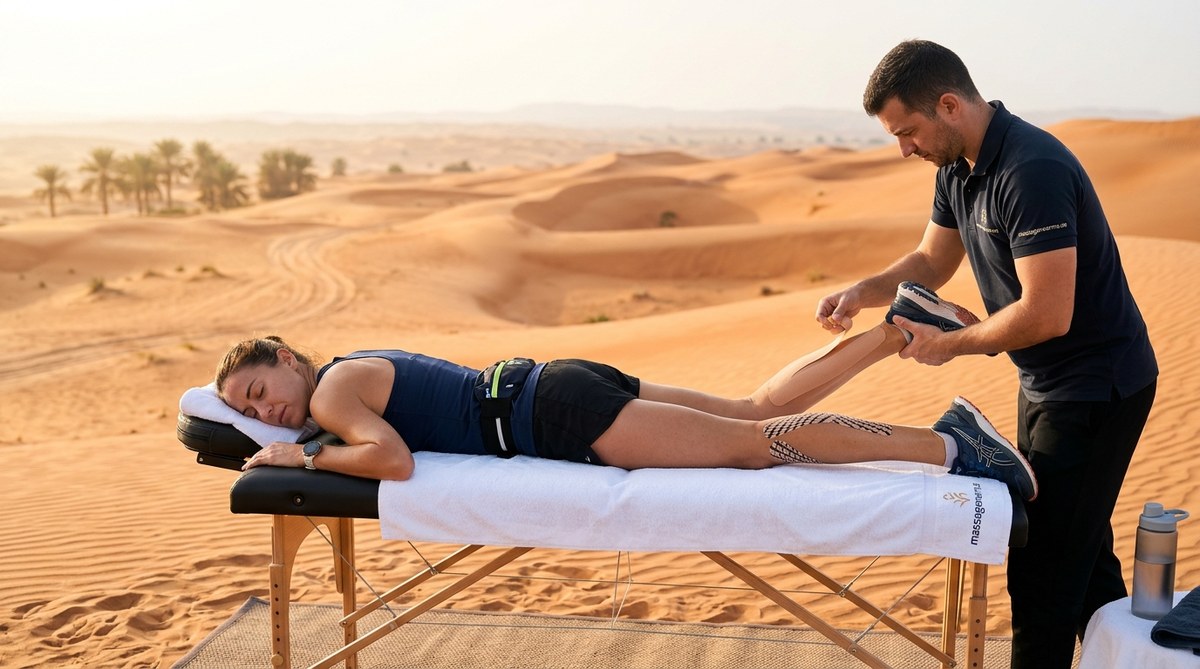
You lace up your trainers at dawn. The air is already warm. Your route takes you past the dunes near Al Wathba, and the sand shifts under every stride. Desert running is a unique challenge. The heat, the uneven terrain, and the dry air all put extra stress on your body. If you are an expat or tourist in Abu Dhabi training for a trail race, you know that recovery is just as important as the run itself. One of the most effective tools for staying in top form is kinesiology massage.
Kinesiology massage for runners is not your standard spa treatment. It is a targeted therapy that works with your muscles, fascia, and joints to improve movement and reduce pain. Unlike a general relaxation massage, this technique focuses on the specific patterns runners use. It helps correct imbalances caused by running on soft sand or pavement. For anyone preparing for a desert race in the UAE, it can be the difference between a personal best and a sidelining injury.
Kinesiology massage for runners is a targeted therapy that improves muscle function, corrects imbalances from desert running, and speeds recovery. It is ideal for Abu Dhabi trail runners and tourists preparing for a race. This guide explains how it works, when to book it, and what to expect from a session in the UAE.
Why Desert Running Demands a Different Recovery
Running in the desert puts unique demands on your body. The soft sand forces your calves, ankles, and hip flexors to work harder with every step. Your core engages constantly to keep you stable on uneven ground. Add the heat, and your muscles fatigue faster than they would on a flat road.
Standard post run stretching helps, but it does not address the deep tissue tension that builds up over kilometers of trail running. Kinesiology massage targets those overworked areas. It uses light, specific pressure to release tight fascia and improve blood flow. For a runner tackling the Al Ain desert trails or the dunes near Liwa, this type of massage can help maintain stride efficiency over long distances.
Many runners make the mistake of only treating sore spots. Kinesiology massage looks at the whole kinetic chain. A tight hip on one side can cause knee pain on the other. A therapist trained in kinesiology will assess your gait, your foot strike, and your posture to find the root cause of any discomfort.
How Kinesiology Massage Differs from Sports Massage
People often confuse kinesiology massage with sports massage. While they share some techniques, they have different goals. Sports massage is usually more intense. It focuses on breaking down knots and reducing muscle soreness after a hard workout. Kinesiology massage is subtler. It works with the body’s natural movement patterns to retrain muscles and improve coordination.
Here is a simple breakdown of the differences:
| Technique | Sports Massage | Kinesiology Massage |
|---|---|---|
| Pressure | Deep, often intense | Light to moderate, precise |
| Goal | Break down adhesions and knots | Improve muscle function and movement |
| Focus | Sore or injured areas | Whole body movement patterns |
| Best for | Post race recovery | Pre race preparation and ongoing maintenance |
| Typical session | 30 to 60 minutes | 45 to 75 minutes |
For a runner in Abu Dhabi, both types have their place. But if you are looking to improve your running form before a big desert race, kinesiology massage is often the better choice.
The Practical Process: What to Expect in a Session
If you have never tried kinesiology massage for runners, you might wonder what happens during a session. Here is a step by step breakdown of a typical appointment at a clinic in Abu Dhabi.
- Initial assessment. The therapist will ask about your running history, any pain points, and your upcoming race. They may watch you walk or run a few steps to see your natural gait.
- Muscle testing. Using light pressure, the therapist tests specific muscles to see how they respond. This helps identify weak or overactive areas.
- Targeted work. The therapist applies gentle, rhythmic strokes along the muscle fibers. The goal is to reset the muscle’s resting length and improve communication between the muscle and the nervous system.
- Movement retraining. You may be asked to perform simple movements, like a hip flexor stretch or a squat, while the therapist guides you. This reinforces proper form.
- Post session advice. The therapist gives you stretches or exercises to do at home. These help maintain the benefits until your next session.
A full session usually lasts about an hour. You should feel relaxed and more aware of your body afterward. Some runners report feeling lighter on their feet immediately after a session.
When to Book Your Session for Best Results
Timing matters. If you book a kinesiology massage too close to your race, you might not get the full benefit. If you book it too early, the effects may fade before race day.
Here is a simple guide for Abu Dhabi runners:
- Two to three weeks before the race. This is the ideal window. Your body has time to adapt to the changes. You can also do a follow up session if needed.
- One week before the race. A single session can still help. Focus on any specific problem areas, like tight hamstrings or sore hips.
- The day before the race. Avoid deep work. A very light session can help calm nerves and improve circulation, but keep it gentle.
- After the race. Kinesiology massage is excellent for recovery. It helps flush out metabolic waste and reduce soreness.
For tourists visiting Abu Dhabi for a specific race, try to book your session as soon as you arrive. The travel and climate change can tighten your muscles. A session early in your trip can help you adjust faster.
Common Mistakes Runners Make with Massage
Even experienced runners can make errors when adding massage to their training. Here are the most common mistakes and how to avoid them.
- Skipping hydration. Massage works by moving fluid through your tissues. If you are dehydrated, the process is less effective. Drink water before and after your session.
- Expecting a cure all. Kinesiology massage is a tool, not a magic fix. You still need proper training, nutrition, and sleep.
- Ignoring pain. If a technique hurts, tell your therapist. Kinesiology massage should not be painful. Discomfort is normal, but sharp pain is a sign to stop.
- Waiting until you are injured. Many runners only book a massage when something hurts. Regular maintenance sessions can prevent injuries before they start.
- Not communicating with your therapist. Be specific about your goals. Tell them about your race distance, the terrain, and any past injuries.
“The best runners treat their bodies like high performance cars. You would not wait for a breakdown to change the oil. Kinesiology massage is your regular tune up.” – Ahmed Al Mansouri, sports therapist at a clinic in Abu Dhabi.
Combining Kinesiology Massage with Other Recovery Methods
Kinesiology massage works well on its own, but it is even more effective when combined with other recovery practices. Here are a few ways to build a complete recovery routine for desert running.
- Foam rolling. Use a foam roller on your calves, quads, and glutes before your run. This warms up the tissue. Save the kinesiology massage for deeper work after your run or on rest days.
- Stretching. Focus on dynamic stretches before your run and static stretches after. Your therapist can recommend specific stretches based on your session.
- Cold exposure. Many runners in the UAE use ice baths or cold showers to reduce inflammation. This can complement the work done during a massage.
- Sleep and nutrition. Your body repairs itself while you sleep. Aim for seven to nine hours per night. Eat enough protein to support muscle recovery.
- Hydration with electrolytes. In the UAE heat, you lose salt through sweat. Replenish with electrolytes, not just water.
For a deeper look at different techniques, you can read about how to choose the perfect massage type for your wellness goals in the UAE. This guide helps you match treatments to your specific needs.
Finding a Qualified Therapist in Abu Dhabi
Not all massage therapists are trained in kinesiology. When booking a session, look for someone with specific certification. Many clinics in Abu Dhabi now offer kinesiology massage, especially those that cater to athletes.
Ask these questions before you book:
- Do you have experience working with runners?
- Are you certified in kinesiology taping or muscle testing?
- Can you tailor the session to desert running conditions?
- What is your approach to pre race preparation?
A good therapist will ask you questions too. They should want to know about your training volume, your race distance, and any areas of concern. If they do not ask, consider finding another provider.
If you are new to massage in the UAE, you might find it helpful to explore the different types of massage therapies available in the UAE for deep relaxation. This resource explains the range of options and helps you understand what each one offers.
Your Next Steps for Race Day Success
Running a desert race in Abu Dhabi is an achievement. The heat, the sand, and the distance test your body and your mind. Kinesiology massage for runners gives you an edge. It helps you move more efficiently, recover faster, and stay injury free.
Start by booking a session two to three weeks before your race. Communicate your goals clearly. Follow the aftercare advice. Combine the massage with good hydration, proper nutrition, and rest.
Your body will thank you on race day. Every stride will feel smoother. Your breathing will stay steady. And when you cross that finish line, you will know that you gave yourself every possible advantage.