Dubai is a city that moves fast. From early morning runs along Kite Beach to late night sessions at the gym, fitness is woven into the lifestyle here. But pushing your body hard means your muscles need real attention afterward. That is where the right massage techniques come in. Whether you are training for a race at the Dubai Marathon or just trying to stay consistent with your weekly workouts, recovery is not optional. It is essential.
Muscle recovery after exercise is not just about rest. Targeted massage techniques reduce soreness, improve blood flow, and speed up healing. For Dubai fitness enthusiasts, choosing the right method depends on your workout type, pain level, and goals. This guide breaks down the five most effective techniques, how to use them, and where to find expert care in the city.
Why Massage Matters for Recovery in Dubai
Dubai heat adds extra strain on your body during exercise. High temperatures mean your muscles work harder to cool down, which increases fatigue and the risk of micro tears. After a workout, your muscle fibers need to repair. Massage helps by increasing circulation, flushing out lactic acid, and reducing inflammation.
A 2026 study from the Journal of Sports Science confirmed that regular massage therapy reduces delayed onset muscle soreness by up to 30 percent. That is a big deal when you have back to back training days. In a city where many people train outdoors even in the summer months, recovery techniques are not a luxury. They are a necessity.
The Top 5 Massage Techniques for Muscle Recovery
Each technique serves a different purpose. Some target deep tissue layers. Others focus on releasing trigger points or improving flexibility. Here are the five most effective methods for muscle recovery after a workout in Dubai.
1. Sports Massage
Sports massage is designed specifically for active people. It combines deep pressure with stretching to improve range of motion and reduce recovery time. This technique works well before and after exercise.
- Pre event sports massage helps warm up muscles and prevent injury.
- Post event sports massage reduces swelling and flushes out metabolic waste.
Many therapists in Dubai offer sports massage tailored to your sport. Whether you cycle on Al Qudra, run at Dubai Creek, or lift weights at a gym in Marina, this method adapts to your needs.
2. Deep Tissue Massage
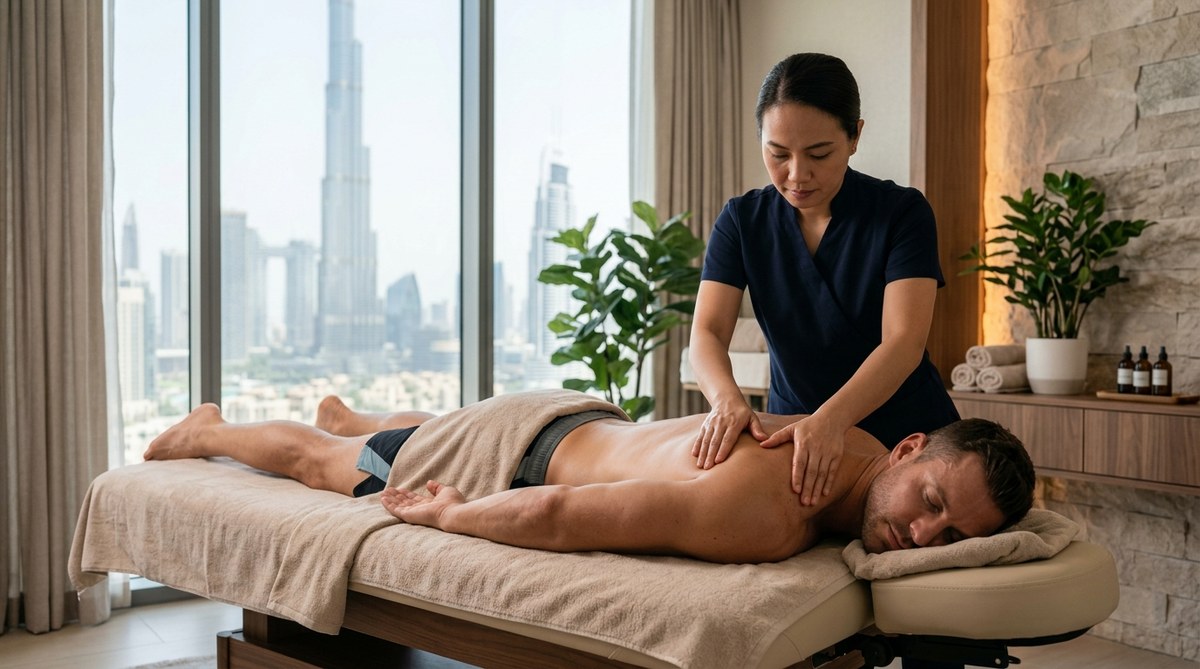
Deep tissue massage focuses on the deeper layers of muscle and connective tissue. It uses slow strokes and firm pressure to break up adhesions and realign fibers. This is ideal for chronic tightness or areas that feel stiff after repeated workouts.
People who train heavily often carry tension in the shoulders, lower back, and hamstrings. Deep tissue massage targets those spots. It can feel intense during the session, but the relief afterward is noticeable.
3. Trigger Point Therapy
Trigger points are small, tight knots in muscle fibers. They cause pain and limit movement. Trigger point therapy applies focused pressure to these knots to release them. The therapist may hold pressure for 30 to 60 seconds until the muscle relaxes.
This technique is especially useful if you have stubborn pain in one area. For example, runners in Dubai often develop trigger points in the calves and glutes. A few sessions of trigger point therapy can make a big difference.
4. Myofascial Release
Myofascial release targets the fascia, the thin layer of tissue that surrounds your muscles. When fascia becomes tight or restricted, it pulls on the muscle and causes discomfort. This technique uses gentle, sustained pressure to stretch and loosen the fascia.
It feels different from deep tissue. The pressure is lighter, and the therapist holds positions for longer. Myofascial release works well for people who feel stiff all over or have trouble moving freely after hard workouts.
5. Swedish Massage for Active Recovery
Swedish massage is often seen as a relaxation technique, but it has real benefits for recovery. It uses long, flowing strokes and light to medium pressure to improve blood circulation and reduce stress hormones.
On days when your muscles are sore but not injured, Swedish massage helps speed up the recovery process without adding more strain. It is a good option for active recovery days or after a light workout.
How to Choose the Right Technique for Your Workout
Not every massage technique suits every type of exercise. The table below breaks down which method works best based on your activity and recovery goals.
| Workout Type | Best Massage Technique | Why It Works |
|---|---|---|
| Running or cardio | Sports massage + trigger point therapy | Reduces calf and hamstring tightness, flushes lactic acid |
| Weight training | Deep tissue massage | Breaks down adhesions in shoulders, back, and legs |
| Yoga or pilates | Myofascial release | Improves flexibility and releases fascia restrictions |
| High intensity interval training | Sports massage + Swedish massage | Combines deep work with active recovery for fast results |
| Swimming | Trigger point therapy + myofascial release | Targets shoulders, neck, and lower back tension |
If you are unsure which method fits your routine, start with sports massage. It covers most recovery needs and can be adjusted based on how your body feels.
A Simple Recovery Routine You Can Follow
Here is a practical routine you can use after your next workout in Dubai. It takes about 15 minutes and works well whether you visit a therapist or use self massage tools.
- Spend 2 minutes doing light stretching. Focus on the muscles you worked most.
- Use a foam roller or massage ball on each major muscle group for 1 minute. Go slow and breathe through tight spots.
- Apply targeted pressure to any knots using trigger point therapy. Hold each point for 30 seconds.
- Finish with 3 minutes of gentle Swedish style strokes using your hands or a tool. This helps blood flow return to normal.
Repeat this routine within 30 minutes of finishing your workout for the best results.
Common Mistakes People Make with Recovery Massage
Even with good intentions, people often make mistakes that limit the benefits of massage. Here are the most common ones and how to avoid them.
- Waiting too long after a workout. The ideal window for recovery massage is within two hours of exercise.
- Using too much pressure too early. Start with moderate pressure and increase gradually.
- Skipping hydration. Massage releases toxins from muscle tissue. Without water, you may feel sore or fatigued afterward.
- Ignoring pain signals. If a technique hurts sharply, stop and tell your therapist.
- Treating massage as a one time fix. Consistency matters. One session helps, but regular care produces lasting change.
A therapist with experience in sports recovery will ask about your workout habits, pain points, and goals before starting. If they do not, consider finding someone else. Good communication is the foundation of effective treatment.
Where to Find Massage Services in Dubai
Dubai has a wide range of options for recovery massage. You can find therapists who specialize in sports recovery at clinics, spas, and wellness centers across the city. Many offer mobile services that come to your home or gym, which is convenient after a long training day.
For a broad overview of what is available, check out the most popular massage types in the UAE for ultimate relaxation. That guide covers everything from traditional techniques to modern therapies.
If you are deciding between two common approaches, read about how to choose between deep tissue and Swedish massage for your Dubai spa day. It helps clarify which style matches your recovery needs.
And if you are curious about local traditions, learn what makes a traditional hammam massage a must try experience in the UAE. It combines heat, steam, and massage in a way that supports muscle recovery and relaxation.
Tips for Getting the Most Out of Your Massage
Your recovery does not stop when the massage ends. What you do afterward matters just as much.
- Drink water before and after your session. Aim for at least 500 ml within an hour.
- Eat a small meal with protein and healthy carbs within two hours. This supports muscle repair.
- Avoid intense exercise for at least 12 hours after deep tissue or trigger point work.
- Take a warm shower or bath to keep muscles relaxed.
- Track how your body feels the next day. Note any changes in soreness or mobility.
These habits turn a single massage session into a lasting recovery tool.
Why Consistency Beats Intensity
One deep tissue massage after a month of hard training helps, but regular sessions give better results. Think of massage as part of your training schedule, not something you do only when you feel broken.
Fitness enthusiasts in Dubai who book a session every week or every two weeks report less soreness, fewer injuries, and better performance. It is the same principle as stretching or hydrating. Small, consistent actions add up.
For more guidance on building a balanced wellness routine, take a look at these essential wellness tips for maintaining balance in a fast paced UAE lifestyle. They cover sleep, nutrition, and stress management alongside recovery.
Your Next Step Toward Better Recovery
You do not need to be a professional athlete to benefit from these techniques. If you exercise regularly in Dubai, your body deserves proper care. Start by identifying which type of workout you do most often. Then pick one massage technique from the list above and try it.
Book a session with a qualified therapist or learn a few self massage moves you can do at home. Pay attention to how your body responds. Over time, you will notice that recovery becomes easier and your performance improves.
The goal is not to avoid soreness completely. The goal is to recover well enough that you can show up for your next workout feeling strong, not broken. That is what good recovery looks like. And in a city like Dubai, where every day offers a chance to move, that makes all the difference.