You have laced up your boots, packed three litres of water, and checked the weather for your weekend trek through the Al Qudra desert. The golden dunes stretch out before you, and your heart races with anticipation. But there is one thing you might have missed. Your muscles are not ready. A strenuous desert hike in Dubai puts unique demands on your body. The soft sand shifts under every step. Your calves, glutes, and lower back work twice as hard as they would on a solid trail. Without proper preparation, you risk strain, fatigue, and a recovery that lasts longer than the hike itself. That is where a targeted session comes in. A sports massage in Dubai before your desert hike is not a luxury. It is a strategic tool for performance and safety.
A sports massage before your Dubai desert hike reduces injury risk, improves flexibility, and speeds up recovery. It targets the calves, hamstrings, and lower back that bear the brunt of sandy terrain. Book a session 24 to 48 hours before your trek to let your body adapt. Combine it with proper hydration and stretching for the best results on the trail.
How Desert Terrain Changes Your Body
Walking on sand is not the same as walking on pavement. Every step on a dune requires your stabiliser muscles to fire constantly. Your ankles work harder to keep you upright. Your calves shorten and tighten with each push off the ground. Your hip flexors and lower back take on extra load to maintain balance.
Most hikers from Dubai are used to flat gym floors or paved jogging tracks along the Marina. The desert is a different world. The unstable surface forces your muscles into constant micro adjustments. This leads to early fatigue if you are not prepared. A sports massage helps by loosening tight areas before they become a problem. It also increases blood flow to the muscle groups you will rely on most.
What a Sports Massage Does for Hikers
A sports massage is not the same as a relaxing Swedish massage. It is a targeted therapy that works on specific muscle groups. The therapist uses techniques like effleurage, petrissage, and deep tissue work to break down adhesions and improve circulation.
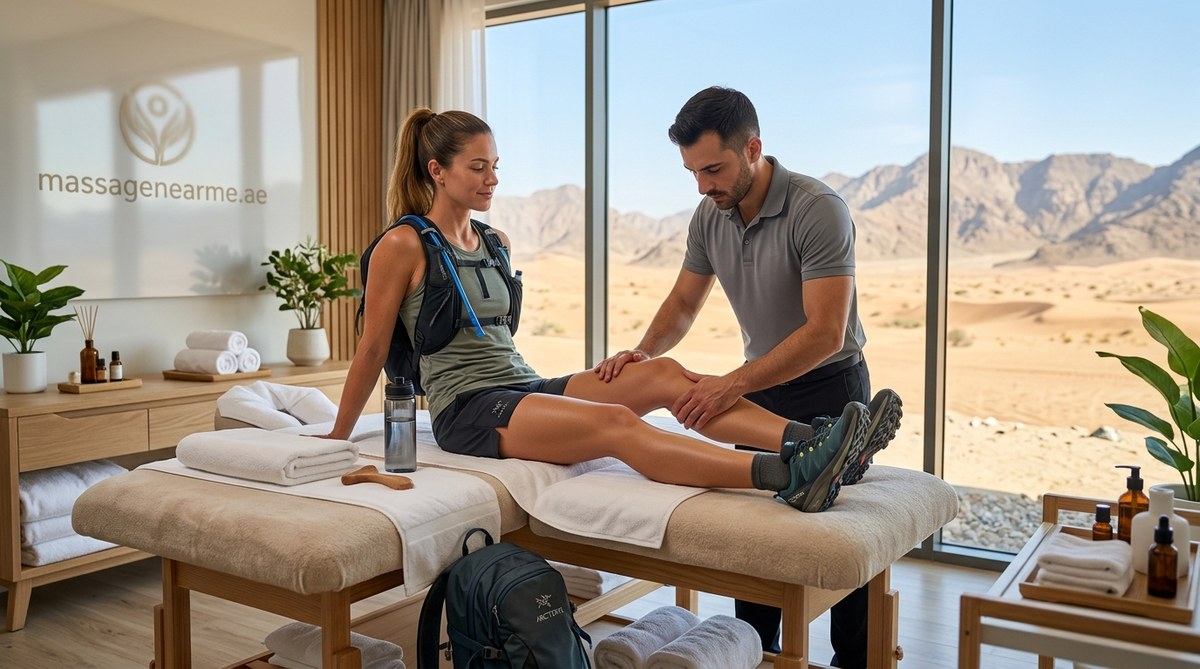
For a desert hike, the focus is on your posterior chain. That means your calves, hamstrings, glutes, and lower back. These muscles take the biggest hit when you walk on soft sand. A good session will also address your hip flexors and ankles.
Here is what a pre hike sports massage can do for you:
- It increases your range of motion. Tight muscles restrict movement. Looser muscles let you take longer, more efficient strides.
- It reduces muscle soreness after the hike. The massage flushes out metabolic waste and brings fresh oxygen to the tissue.
- It helps prevent injuries. By identifying and releasing trigger points, the therapist can reduce the risk of pulls and strains.
- It improves your proprioception. That is your body’s ability to sense its position in space. Better proprioception means better balance on uneven sand.
The Right Timing for Your Session
Timing matters. You should not get a sports massage right before you hit the trail. The treatment causes micro trauma to the muscle fibres, which is part of the healing process. If you hike immediately after, you risk overloading already sensitive tissue.
Book your sports massage in Dubai 24 to 48 hours before your hike. This gives your body time to recover from the treatment itself. You will feel looser and more mobile on the day of the hike without the residual soreness.
Some people prefer a session after the hike for recovery. That works too. But for the best performance and injury prevention, a pre hike session is the smarter choice.
Common Mistakes Hikers Make
Many fitness enthusiasts in Dubai treat a desert hike like a walk in the park. They show up with tight hamstrings and expect to power through. That approach often leads to cramps or strains halfway through the trek.
Here is a breakdown of common mistakes and how a sports massage addresses them.
| Mistake | What Happens | How Sports Massage Helps |
|---|---|---|
| Skipping warm up | Muscles are cold and prone to tearing | Massage increases tissue temperature and elasticity |
| Ignoring tight calves | Sand forces calves to overwork | Releases tension in gastrocnemius and soleus |
| Poor hydration | Muscle cramps and fatigue | Massage improves circulation for better nutrient delivery |
| Wearing wrong footwear | Ankle instability and blisters | Massage strengthens ankle stabilisers indirectly |
| Overstretching before hike | Micro tears and weakness | Massage provides controlled lengthening without risk |
A Step by Step Plan for Your Pre Hike Massage
Follow this simple plan to get the most out of your session.
- Book your appointment at least 48 hours before your hike. Use a service like massagenearme.ae to find a qualified therapist near your location in Dubai.
- Hydrate well in the 24 hours before your session. Drink water with electrolytes. Avoid alcohol and caffeine.
- Tell your therapist about your hike. Mention the distance, the terrain, and any previous injuries. This helps them tailor the session.
- Eat a light meal two hours before the massage. A banana or a small smoothie works well.
- After the session, rest. Do not do any intense exercise. Go for a light walk or do gentle stretching if you feel tight.
- On the morning of the hike, do a dynamic warm up. Leg swings, walking lunges, and ankle circles prepare your body without overstretching.
A certified therapist in Dubai once told me that the most common issue he sees in hikers is tight hip flexors from sitting at a desk all week. A focused sports massage can release that tension in 30 minutes. It makes a noticeable difference on the trail.
What to Expect During a Sports Massage
If you have never had a sports massage, the experience can feel different from a spa massage. The therapist will use deeper pressure. They may use their elbows or forearms to reach deeper layers of muscle. You might feel some discomfort, but it should not be painful. Communicate with your therapist. Tell them if the pressure is too much or too little.
The session usually lasts between 45 and 90 minutes. For a pre hike session, 60 minutes is often enough. The therapist will focus on the legs, glutes, and lower back. They may also work on your feet, which take a beating on sandy trails.
After the massage, you will feel a sense of lightness in your legs. Your range of motion will improve. You might notice that you can bend forward and touch your toes more easily. That is the release of tension in your hamstrings and lower back.
Pairing Massage with Other Recovery Methods
A sports massage works best when you pair it with good habits. Do not rely on the massage alone to save you from injury. Use these complementary practices.
- Foam rolling. A quick session with a foam roller the day before your hike can maintain the benefits of your massage.
- Stretching. Focus on dynamic stretches before the hike and static stretches after.
- Proper nutrition. Eat a meal rich in protein and complex carbs the night before your hike.
- Sleep. Aim for at least seven hours of quality sleep before your trek. Your muscles repair and recover during deep sleep.
For more ideas on how to combine different therapies, check out how to combine massage types for the ultimate spa day in the UAE.
When to Avoid a Sports Massage
A sports massage is not for everyone in every situation. Avoid it if you have a fever, an open wound, or a recent injury that is still inflamed. If you have a medical condition like deep vein thrombosis or a blood clotting disorder, consult your doctor first.
Also, avoid a sports massage if you are severely dehydrated or have not eaten. The treatment can lower your blood pressure, and combining it with low energy levels can make you feel dizzy.
Your Recovery After the Hike
The benefits of a sports massage extend beyond the hike itself. After you finish your trek, your muscles will be tired and inflamed. A post hike sports massage can speed up recovery by flushing out lactic acid and reducing swelling.
But if you can only book one session, make it the pre hike one. Prevention is always better than treatment. A well prepared body handles the stress of the desert much better.
If you want to learn more about how massage supports an active lifestyle, take a look at top 5 massage techniques for muscle recovery after a workout in Dubai. It covers similar principles that apply to hiking.
Why Dubai Hikers Need This More Than Others
Dubai offers world class hiking trails. From the Fossil Rock loop to the more challenging paths in Hatta, the terrain is beautiful but unforgiving. The heat adds another layer of stress. Even in the cooler months, your body works harder to regulate temperature. That extra effort drains your muscles faster.
A sports massage in Dubai is especially valuable because it helps your body adapt to the local conditions. The therapist understands the demands of the environment. They know which muscle groups take the most strain on sandy, uneven ground.
Make Your Next Hike Your Best One
You do not need to be an elite athlete to benefit from a sports massage. If you enjoy hiking in the desert, your body deserves the same care that a runner or cyclist gives theirs. A single session can transform how you feel on the trail and how you recover afterwards.
Book your appointment through a trusted provider like massagenearme.ae. Tell your therapist about your planned route. Let them prepare your body for the dunes. Then step onto the sand with confidence, knowing your muscles are ready for the challenge.
Your next desert hike in Dubai will test your endurance, your balance, and your willpower. Give yourself the advantage of a prepared body. That is the difference between finishing the hike with a smile and limping back to the car.