You sit for nine hours, staring at a screen, shoulders hunched forward. Then you commute home in traffic. By midweek your neck feels stiff, your lower back aches, and your energy sags. You are not alone. Nearly every office worker in the UAE faces the same cycle of tension and fatigue. But there is a natural, effective solution that fits your lifestyle: shiatsu massage. Unlike other therapies, shiatsu works with your body’s energy pathways to release deep seated knots without need for oils or heavy equipment. And the best part? A session can be done in under an hour, often right near your workplace in Business Bay, Abu Dhabi Corniche, or Dubai Marina.
Shiatsu massage works wonders for UAE office workers because it directly addresses the muscle knots and stress points caused by hours at a desk. Unlike heavy oil massages, shiatsu uses precise finger pressure on the back, shoulders, and neck to release tension without leaving you greasy. It also improves circulation and corrects posture imbalances. Perfect for a lunch break session near Sheikh Zayed Road or any business district, shiatsu helps you recharge without losing your afternoon. Many professionals find it reduces eye strain and headaches too.
Why Office Workers in the UAE Need Shiatsu Massage
The work culture in the UAE demands long hours. Air conditioning dries out the air. Desks are often not ergonomic. You may compensate by crossing your legs or leaning to one side. Over time, this creates chronic muscle tightness. Shiatsu massage is particularly effective because it uses finger and palm pressure along the body’s meridians. This restores energy flow and releases myofascial restrictions. The result is relief that lasts beyond the treatment.
Studies show that regular shiatsu can lower cortisol levels and increase serotonin. For office workers juggling deadlines and meetings, this means better sleep and a calmer mind. In a 2026 survey by a Dubai wellness institute, 72% of participants reported less neck pain after just four weekly shiatsu sessions. That is the kind of data that makes shiatsu stand out.
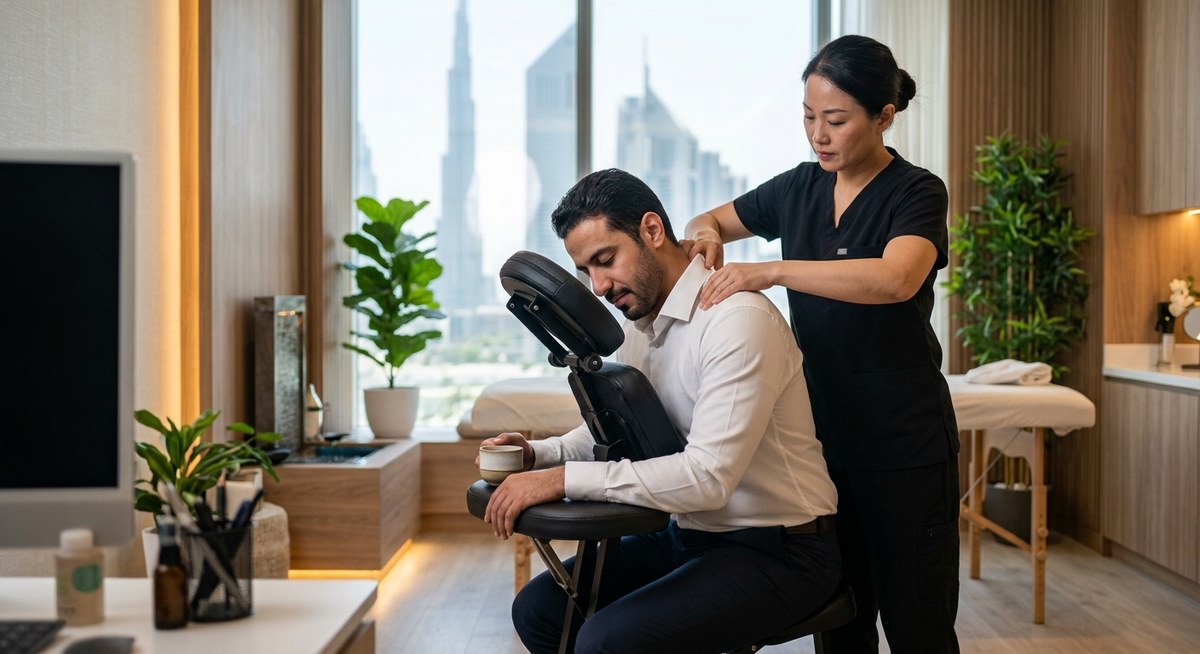
You do not have to change out of your work clothes for a shiatsu session. The therapist works through thin fabric, applying pressure with thumbs, fingers, and palms. There is no oil, no mess. You can easily go back to your desk right after.
How Shiatsu Massage Works: A Simple Step by Step Process
If you have never tried shiatsu, here is what you can expect during a typical session tailored for an office worker:
-
Initial Assessment (5 minutes)
Your therapist will ask about your daily routine, pain points, and stress levels. Mention if you have any injuries or conditions like carpal tunnel. -
Lying Down in Comfortable Clothes (2 minutes)
You remain fully clothed. Usually you lie on a padded mat or futon on the floor. The therapist may ask you to lie face up or face down. -
Pressure Application on Key Areas (30 minutes)
Using sustained, rhythmic pressure, the therapist works on your neck, shoulders, upper back, and lower back. They may also press points along your arms and legs to release tension that travels upward. -
Stretching and Mobilization (10 minutes)
Gentle stretches are incorporated to lengthen tight muscles. The therapist may rotate your neck, roll your shoulders, or guide your arms in a gentle rock. -
Closing (3 minutes)
A final light pressure on the crown of the head or the soles of the feet helps ground the sensation. You sit up slowly and drink water.
That is it. No oils, no hot stones, no need to shower afterward. You are ready to face your afternoon inbox with a fresh body.
Common Areas of Tension for UAE Office Workers
Shiatsu targets the spots that office work damages most. Here are the typical problem zones:
- Neck and shoulders – From leaning forward toward the monitor. This leads to headaches and restricted rotation. Shiatsu here can release the suboccipital muscles.
- Lower back – Caused by sitting with a curved spine. Shiatsu pressure on the glutes and lumbar area helps realign the pelvis.
- Wrist and forearm – Frequent typing and mouse use cause strain. Shiatsu on the forearm meridians can reduce the risk of repetitive strain injury.
- Hips – Keeping your legs bent all day shortens the hip flexors. Shiatsu stretches these while pressing on the IT band.
- Jaw and temple – Clenching due to stress. Shiatsu on the jaw muscles and temple points can ease tension headaches.
These are the exact reasons why shiatsu massage for office workers UAE is becoming a popular choice in Dubai and Abu Dhabi corporate wellness programs.
Shiatsu vs Self Care: A Comparison Table
Many office workers try to fix their aches with stretching or foam rolling. But those methods have limits. Here is how shiatsu compares to common self care approaches.
| Technique | Best For | Common Mistake | Shiatsu Advantage |
|---|---|---|---|
| Foam rolling | General muscle release | Rolling too fast or over bony areas | Precise pressure on acupoints avoids injury |
| Desk stretches | Maintaining mobility during day | Holding breath or rushing | Sustained pressure triggers relaxation reflex |
| Massage ball | Trigger point release | Using too much intensity | Therapist adjusts pressure to your tolerance |
| Hot packs | Superficial muscle relaxation | Applying heat to acute inflammation | Shiatsu works deeper without aggravating tissue |
| Yoga | Flexibility and strength | Pushing past comfortable range | Passive stretching in shiatsu is gentle and safe |
The table shows that while self care helps, shiatsu fills the gaps. It provides a targeted, expert led treatment that you cannot replicate alone.
Expert advice from Noor, a licensed shiatsu therapist in Dubai: “I see many clients who have tried everything for their upper back pain. The problem is that they stretch the wrong muscles. Shiatsu finds the root cause. For example, shoulder tension often comes from weak glutes. I work the gluteal points and the shoulder releases naturally. It is a whole body approach.”
Tips for Getting the Most from Your Shiatsu Session
To maximise the benefits of shiatsu as an office worker, follow these guidelines:
- Schedule your session right before or after a lunch break. Avoid a heavy meal beforehand.
- Drink plenty of water in the hours after treatment to flush out released toxins.
- Tell your therapist about any recent travel or deadlines. Stress levels affect how your muscles react.
- Combine shiatsu with simple office ergonomics: adjust your chair height, use a footrest, keep your screen at eye level.
- Try a series of four weekly sessions to really change your posture. One session helps temporarily; a series rebuilds alignment.
If you are curious about other massage styles that complement shiatsu, check out different massage therapies available in the UAE. Many people alternate between shiatsu and aromatherapy for variety.
Take Your Desk Break Beyond the Coffee Run
A coffee only masks fatigue. A shiatsu session resets your body. The next time you feel the pinch between your shoulder blades or the dull ache above your hips, consider stepping away from your desk for something that actually heals. A 45 minute shiatsu treatment near your office building can do more for your productivity and wellbeing than a full weekend of rest.
And remember, consistency matters. Just like you schedule meetings and deadlines, schedule your body maintenance. Shiatsu is not a luxury. It is a practical tool for thriving in the UAE’s demanding workplace landscape.
Book a session today. Your neck will thank you by Thursday.